
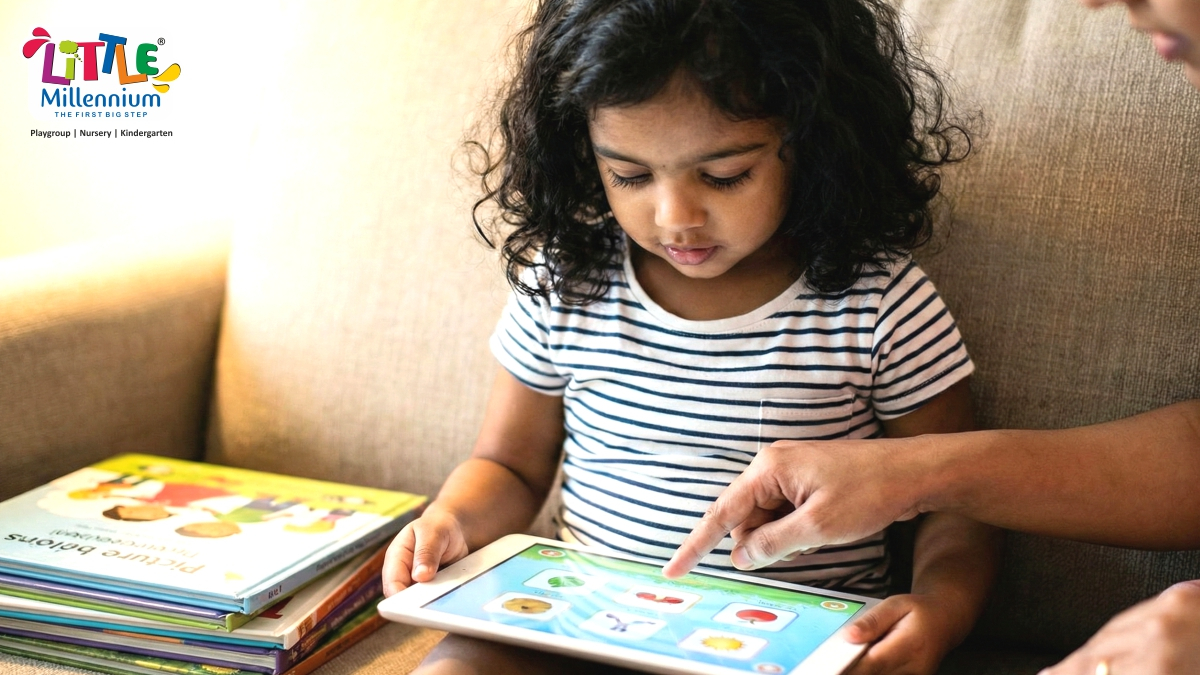
Screens are a part of everyday life—smartphones, tablets, televisions, and computers are all around us. While digital tools can support learning when used appropriately, excessive or unstructured screen time can affect a young child’s overall development. Finding the right balance is essential, especially during the preschool years.
At Little Millennium, technology is used thoughtfully through a balanced learning approach, ensuring that screen exposure never replaces hands-on experiences, play, or real-world interaction.
How Screen Time Affects Young Children
Physical Well-being
Long periods of screen use can reduce active playtime, which is important for developing strength, coordination, and healthy movement habits. Limited physical activity may also affect posture, eyesight, and overall energy levels.
Attention & Learning
Passive screen consumption can shorten attention spans and reduce focus. Young children learn best through interaction—touching, moving, exploring, and asking questions. Screens are most effective when used briefly and purposefully, alongside physical learning activities.
Social & Emotional Development
Face-to-face interactions help children understand emotions, communication, and social cues. Too much screen time may limit these opportunities, making it harder for children to build empathy, confidence, and emotional regulation skills.
Sleep Patterns
Screen use close to bedtime can interfere with sleep routines. Reduced sleep quality can affect a child’s mood, memory, and ability to engage positively during the day.
Encouraging Healthy Screen Habits
Parents can support balanced screen use by:
- Setting clear daily screen-time limits
- Avoiding screens during meals and before bedtime
- Choosing age-appropriate, supervised content
- Encouraging outdoor play, reading, and creative activities
Little Millennium’s Balanced Approach
Little Millennium follows a learning model where:
- Digital tools support, not replace, experiential learning
- Physical, sensory, and social development remain core priorities
- Teachers and parents work together to guide healthy habits
A Thoughtful Balance for Growing Minds
Screens aren’t the problem—unbalanced use is. With mindful limits and the right guidance, technology can be a helpful tool rather than a distraction.
If you’re looking for a preschool that understands the importance of balanced development, Little Millennium offers an environment where children learn, play, and grow—both on and off the screen.