5

How to Choose the Best Preschool for Your Child

Choosing the right preschool is one of the earliest and most important decisions parents make for their child’s learning journey. For families searching for the best preschool, the choice goes beyond simply finding a nearby school. A preschool becomes a child’s first structured learning environment where they begin developing confidence, social skills, curiosity, and a love for discovery.

Since early childhood is a period of rapid development, selecting a preschool that encourages exploration, creativity, and emotional growth can have a lasting impact on a child’s future learning experience. Understanding what to look for can help parents make a confident and informed decision.

Look for a Preschool that Prioritises Holistic Early Childhood Development

One of the most important aspects of a good preschool is its focus on holistic development rather than only early academics. During the early years, children learn best through play, interaction, and hands-on experiences that stimulate their imagination and curiosity.

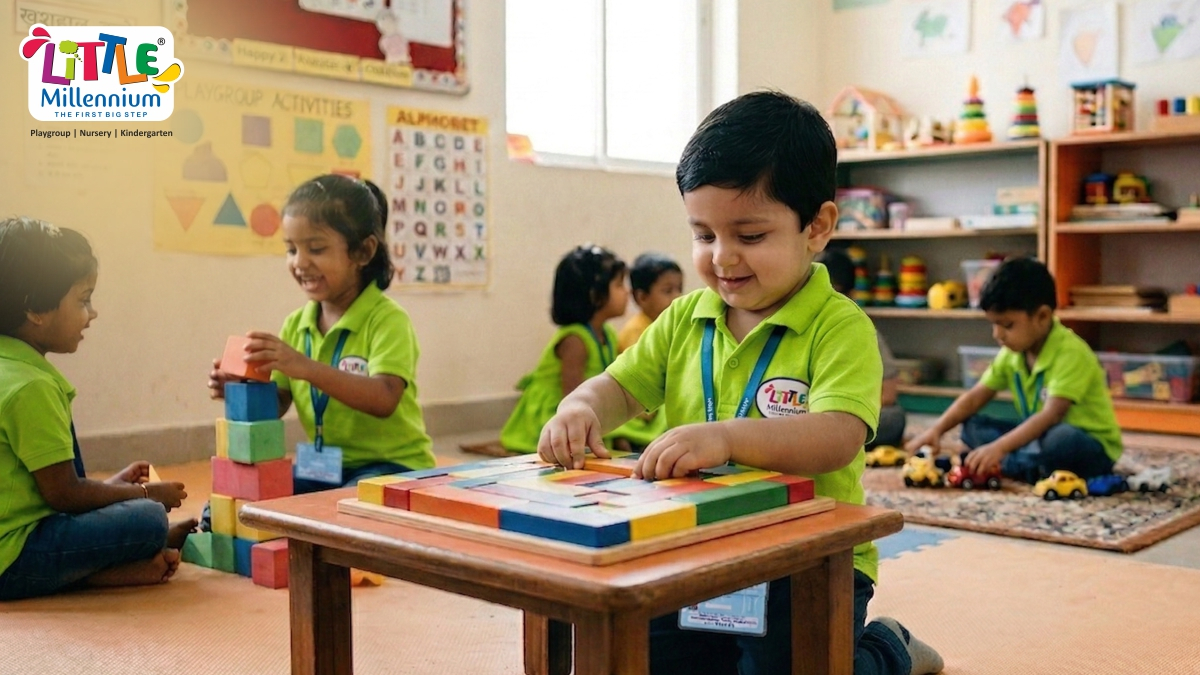
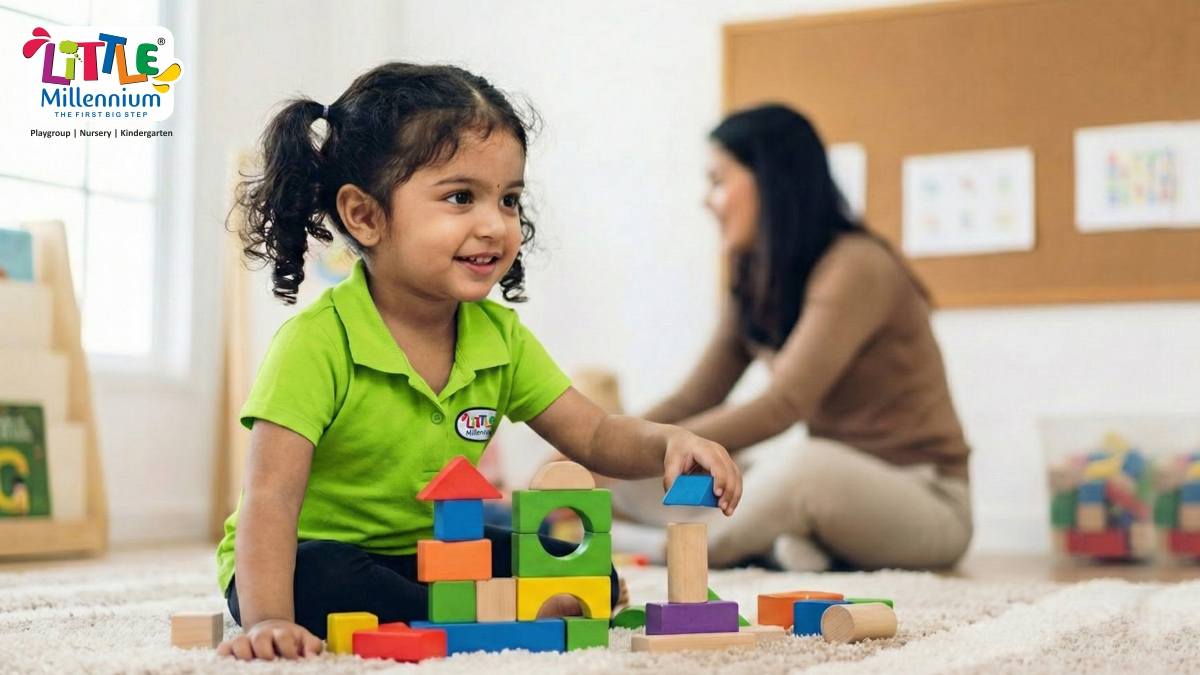
Many parents today prefer preschools with play-based learning and activity-based teaching methods, where children develop language skills, motor coordination, and emotional awareness naturally. Environments that encourage creativity, storytelling, music, and collaborative activities often help children become more confident and socially comfortable.

Preschools that focus on nurturing curiosity and independence during these early years are often considered among the best preschools for cognitive development and early learning.

Choose a Preschool with a Research-Driven Curriculum

A well-structured curriculum plays a crucial role in shaping early childhood education. India’s National Education Policy (NEP 2020) highlights the importance of experiential, play-based, and child-centred learning during the foundational years.

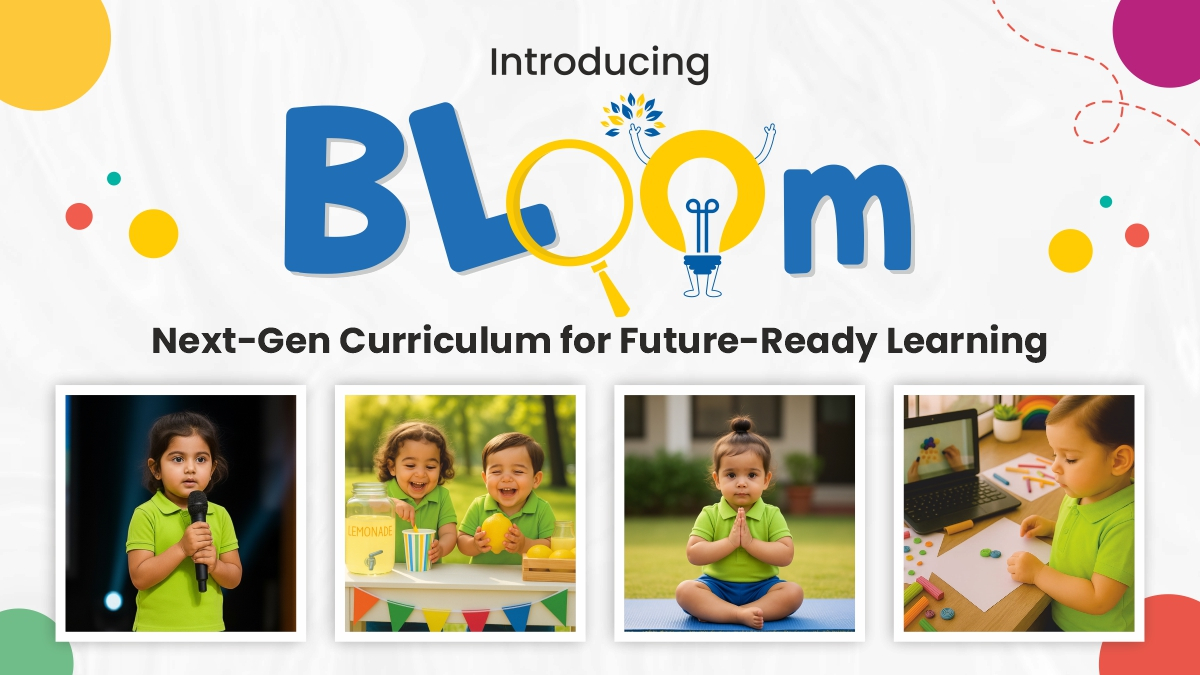
For instance, Little Millennium follows the BLOOM Curriculum, a research-driven framework designed to support the holistic development of young learners. This curriculum encourages learning through exploration, storytelling, creative expression, and hands-on experiences.

The approach focuses on multiple areas of development, including literacy and numeracy readiness, physical growth, creative thinking, and personal and social development. By combining structured activities with joyful learning experiences, children gradually develop both academic readiness and essential life skills.

Preschools that follow such structured yet flexible frameworks often provide some of the best early childhood programs for young learners.

Evaluate the Teaching Philosophy and Learning Approach

Another important factor while choosing a preschool is the teaching approach followed in the classroom. Effective early learning environments typically combine global best practices with child-friendly teaching methods.

A balanced approach may include storytelling, role-play activities, music and movement sessions, and hands-on exploration. These experiences help children develop communication skills, creativity, and confidence while keeping learning engaging and enjoyable.

Influences from respected educators such as Rabindranath Tagore and Howard Gardner have shaped many modern early childhood education philosophies, encouraging creativity, multiple intelligences, and experiential learning. At the same time, the role of teachers remains central. Qualified educators who demonstrate patience, empathy, and enthusiasm create a nurturing environment where children feel comfortable expressing themselves.

Visit the Preschool Environment and Facilities

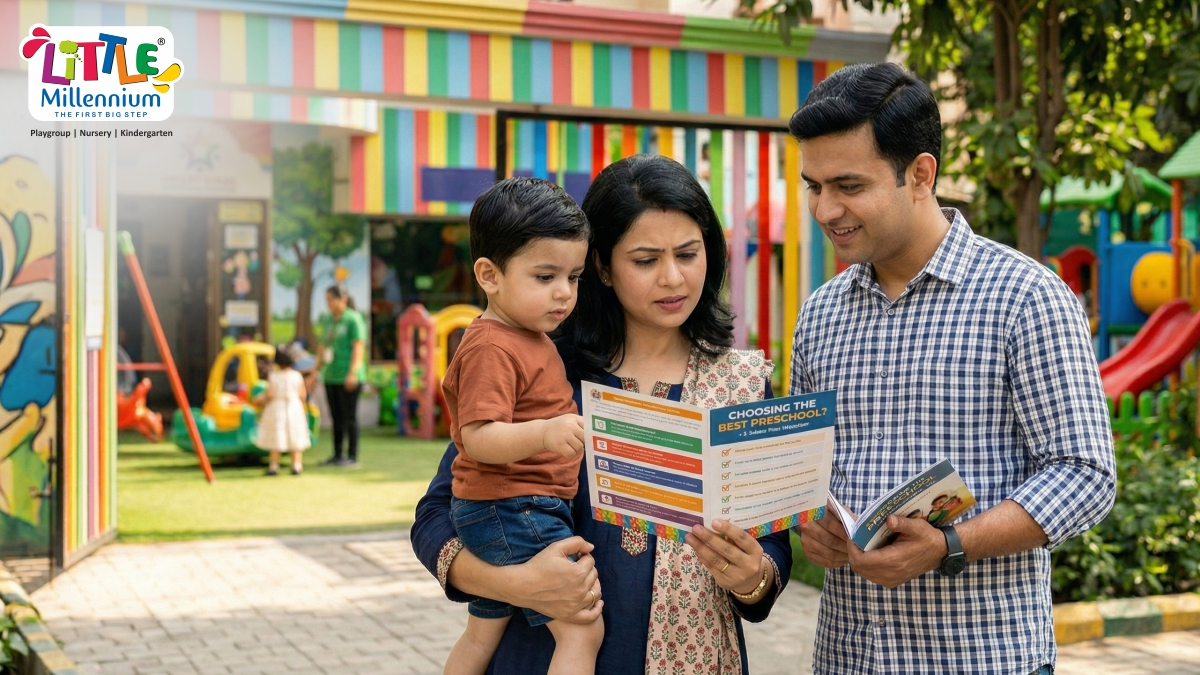
A personal visit to the preschool can provide valuable insights that brochures or websites may not fully convey. Observing the learning environment helps parents understand how the school functions on a daily basis.

During a visit, it is helpful to look at aspects such as classroom safety, hygiene standards, ventilation, and the availability of age-appropriate learning materials. Interactive learning spaces, colourful classrooms, and designated play areas often reflect a preschool’s commitment to creating a stimulating environment for children.

Safety measures are equally important. Many parents today prefer early learning centres with CCTV monitoring, trained staff, and secure child pick-up systems, as these provide reassurance about their child’s well-being during school hours.

Understand the Long-Term Benefits of Quality Preschool Education

A well-chosen preschool does much more than introduce children to letters and numbers. It plays a vital role in shaping important life skills that support future academic and personal growth.

Children who attend structured early childhood education programs often develop stronger communication skills, better emotional regulation, and greater independence. They also learn to interact with peers, solve simple problems, and adapt to group learning environments.

These early experiences help build confidence and school readiness, making the transition to kindergarten and formal schooling smoother and more enjoyable.

Final Thoughts

Selecting the right preschool requires careful consideration of the curriculum, teaching approach, safety standards, and overall learning environment. For families exploring the best preschool, choosing a nurturing and research-driven early learning centre can make a meaningful difference in a child’s development.

A preschool that encourages curiosity, creativity, and social interaction helps children build the confidence and skills they need for lifelong learning. With the right environment and guidance, children begin their educational journey with enthusiasm, independence, and a strong foundation for the years ahead.

3

Nursery & Playgroup Admission : Discover Early Learning at Little Millennium

Choosing the right preschool is an important milestone in every child’s early learning journey. For families exploring nursery and playgroup admission, finding a nurturing environment that encourages curiosity, confidence, and creativity can make a meaningful difference in a child’s development.

Little Millennium is widely recognised among the best preschools for cognitive development and early childhood education in India. Through activity-based learning, structured play, and a supportive environment, the preschool helps children build strong foundations during their formative years.

With 900+ centres across 175 cities and over 2,00,000 children nurtured, Little Millennium continues to be a trusted choice for parents looking for playgroup schools and early learning centres that support holistic development.

Why Playgroup and Nursery Are Important in Early Childhood

The early years between the ages of two and four are a crucial stage of growth. During this time, children develop essential abilities that shape their learning patterns and social behaviour. Nearly 90% of brain development happens before the age of five, making early childhood education an important foundation for future academic and personal success.

A well-designed preschool program allows children to gradually develop language abilities, motor coordination, emotional awareness, and social interaction skills. Through structured play, storytelling, music, and hands-on exploration, young learners begin to understand the world around them while building confidence and independence.

Preschools that focus on play-based learning and holistic development create an environment where children learn naturally through experiences rather than pressure or memorisation.

Settler’s Program: A Gentle Introduction to Preschool

For toddlers stepping into a school environment for the first time, the transition from home can feel overwhelming. Little Millennium’s Settler’s Program is designed to make this adjustment smooth and reassuring.

Age Group: 1.5 to 2.5 years

This three-month settling program allows children to gradually adapt to the preschool routine through shorter sessions, personalised attention, and comforting classroom experiences. During this period, children become familiar with teachers, develop early friendships, and begin to feel secure in the school environment.

Parents often observe reduced separation anxiety, improved social interaction, and growing curiosity about classroom activities as children become comfortable with their new surroundings.

Playgroup Program: Developing Roots (2–3 Years)

The Developing Roots program supports toddlers as they take their first step into structured learning environments. Designed for children between two and three years of age, this program focuses on helping children feel comfortable while encouraging exploration and early social interaction.

Activities in this stage include sensory play, storytelling, music, movement exercises, and creative expression. These experiences support language development, strengthen motor skills, and help children gradually adapt to routines outside the home.

Rather than focusing on formal academics, the program prioritises comfort, curiosity, and confidence, making it ideal for children beginning their early learning journey.

Nursery Program: Emerging Wings (3–4 Years)

The Emerging Wings program builds on the foundations established during the playgroup stage. Designed for children between three and four years, the program introduces structured learning while maintaining a playful and engaging environment.

Children gradually develop early literacy and numeracy readiness through phonics-based learning, rhymes, storytelling, and creative activities. Vocabulary development, problem-solving skills, and collaborative group participation become important parts of the learning experience.

Through guided activities and interactive exploration, children begin building the confidence and communication skills required for the next stage of kindergarten learning.

The BLOOM Curriculum: Supporting Holistic Early Learning

All programs at Little Millennium are supported by the BLOOM Curriculum, the preschool’s research-driven early childhood education framework.

Designed around global best practices in early learning, BLOOM focuses on developing essential areas such as literacy, numeracy, creativity, physical growth, and socio-emotional development. The curriculum encourages children to learn through exploration, storytelling, creative play, and hands-on activities.

Through this approach, children develop not only academic readiness but also essential life skills such as communication, collaboration, mindfulness, and creative thinking.

Qualified Educators and Personalised Attention

Teachers play a critical role in shaping a child’s early learning experience. At Little Millennium, educators are carefully selected based on their qualifications, experience, and ability to connect with young children.

Teachers undergo regular training to ensure they understand modern early childhood education methods and child development principles. With a student-teacher ratio of approximately 10:1, each child receives the attention and emotional support needed to feel confident and engaged in the classroom.

A Safe and Supportive Preschool Environment

For parents looking for childcare centres with preschool programs, safety and hygiene standards are extremely important.

Little Millennium centres follow strict safety protocols to ensure a secure and comfortable learning environment. Facilities typically include CCTV surveillance, secure child pick-up systems, trained staff in health and first aid practices, and daily sanitisation of classrooms and learning materials.

These measures help parents feel confident that their children are learning and growing in a safe and supportive space.

Give Your Child the Right Start

The early learning environment plays a vital role in shaping a child’s confidence, communication skills, and love for discovery. Choosing a preschool that balances structured learning with creativity and care can help children develop the strong foundation needed for future academic success.

For parents searching for playgroup schools and nursery admission, Little Millennium offers a nurturing space where children grow through curiosity, exploration, and joyful learning experiences laying the groundwork for lifelong learning.

1

Preschool Admissions Open : Give Your Child the Perfect Start at Little Millennium

Choosing the right preschool is one of the first major decisions parents make in their child’s learning journey. For families exploring preschool admissions, selecting a nurturing and structured early learning environment can shape a child’s confidence, curiosity, and social skills for years to come.

Little Millennium, recognised as one of the best preschools for cognitive development and early childhood education, provides a safe and stimulating environment where young learners explore, create, and grow through joyful experiences. With a focus on play-based learning and holistic development, the preschool prepares children with the foundational skills they need for their academic journey ahead.

A Trusted Name in Early Childhood Education

With 900+ preschool centres across 175 cities and over 2,00,000 children nurtured, Little Millennium has become a trusted destination for families seeking holistic development preschools and early learning centres for their children.

The preschool focuses on building strong foundations during the most important developmental years, when nearly 90% of brain development happens before the age of five. This makes early childhood education crucial in shaping how children think, communicate, and interact with the world around them.

The BLOOM Curriculum – A Research-Driven Learning Framework

Little Millennium follows the BLOOM Curriculum, its proprietary early childhood education framework designed to support holistic child development through structured play, exploration, and experiential learning.

Rooted in research and global early childhood practices, the curriculum focuses on developing essential skills through multiple areas of growth, including:

  • Literacy Development
  • Numeracy Development
  • Physical Development
  • Personal, Social & Emotional Development
  • Creative Expression
  • Cultural and Environmental Awareness
  • Life Skills Development

Through storytelling, singing, art exploration, mini science experiments, and hands-on activities, children learn through joyful experiences that naturally stimulate curiosity and creativity.

BLOOM also introduces children to future-ready learning through the Foundational Life Skills Framework – Wonder Hour, encouraging communication, mindfulness, creativity, and early problem-solving abilities.

Specialised Programs for Future-Ready Learning

The BLOOM curriculum includes thoughtfully designed experiences that prepare children for a rapidly evolving world.

Children are gradually introduced to ideas such as financial awareness, sustainability, creativity, and digital thinking through engaging programs like:

  • SDGs Superstar Program, which introduces young learners to the United Nations Sustainable Development Goals in simple and age-appropriate ways, encouraging empathy and social responsibility.
  • Finchamp, where children begin understanding the basics of money through storytelling and playful activities around saving, sharing, and spending wisely.
  • S.T.R.E.A.M learning, combining Science, Technology, Reading, Engineering, Arts, and Mathematics to spark curiosity and creative exploration.
  • Digital literacy and early computational thinking, where children build logical thinking skills through fun activities like sorting, sequencing, and recognising patterns.

Mindfulness practices, storytelling, and collaborative play also help children develop emotional strength, creativity, and communication skills from an early age.

Settler’s Program – A Gentle Start to Preschool

Starting preschool can be a big step for toddlers. Little Millennium’s Settler’s Program provides a gradual and comforting transition from home to school.

Age Group: 1.5 – 2.5 years

This three-month settling program allows children to adjust slowly through shorter school hours, nurturing support from teachers, and engaging play-based activities. The focus during this stage is on helping children feel emotionally secure, build trust with educators, and develop early social connections.

Many parents notice positive changes during this period, including reduced separation anxiety, improved social interaction, and growing curiosity about learning.

Age-Appropriate Preschool Programs

Little Millennium’s programs are designed to match every stage of early childhood development.

Developing Roots (Playgroup) – Age 2 to 3 years
 This program supports toddlers taking their first steps into structured learning. Activities focus on sensory exploration, language development, and social interaction while helping children gradually overcome separation anxiety.

Emerging Wings (Nursery) – Age 3 to 4 years
 At this stage, children begin building foundational phonics and early reading skills. Through rhymes, storytelling, and creative activities, they develop vocabulary, listening abilities, and confidence in expression.

Ready To Fly I (Lower KG) – Age 4 to 5 years
 The program encourages deeper participation in classroom activities while strengthening reading, writing, and comprehension skills. Children explore blending sounds, rhyming words, and creative expression.

Ready To Fly II (Upper KG) – Age 5 to 6 years
 This stage prepares children for formal schooling by strengthening reading fluency and introducing early mathematical concepts such as addition, subtraction, and number sequencing.

Together, these programs make Little Millennium one of the best early childhood programs and playgroup schools supporting structured kindergarten readiness.

Learning Beyond the Classroom

Children grow best when learning extends beyond textbooks. At Little Millennium, several engaging activities help develop creativity, confidence, and teamwork.

Talent Fiesta Junior encourages children to showcase their talents in music, dance, storytelling, and reading.

Kids Marathon promotes fitness, social awareness, and self-confidence through fun physical activities.

Story Yoga blends storytelling with movement, helping children develop physical coordination and mindfulness.

Kickers Club, India’s first preschool sports curriculum, encourages teamwork, coordination, and a love for physical activity from an early age.

These experiences make learning dynamic and enjoyable while supporting overall development.

Simple and Transparent Admission Process

The preschool admission process at Little Millennium is simple and parent-friendly.

Parents can begin by filling out the Preschool Admission Form online, after which an admission counsellor connects with them to understand their requirements. Families are encouraged to visit the nearest centre for a guided tour to experience the learning environment before completing the enrolment process.

Academic sessions generally follow the April to March cycle, although timelines may vary slightly across centres.

Give Your Child the Right Start

The early years play a defining role in shaping a child’s confidence, communication skills, and love for learning. Choosing the right preschool can provide the environment and guidance children need to develop these qualities naturally.

For families exploring the best preschool, Little Millennium offers a nurturing and structured learning space where curiosity, creativity, and confidence grow every day. With its research-driven curriculum, experienced educators, and child-focused approach, the preschool creates a strong foundation for lifelong learning and future success.

4

Building Early Foundations

Selecting the right preschool is one of the most important decisions for your child’s future. Beyond infrastructure and faculty, it is the curriculum that truly shapes early learning experiences. At Little Millennium, the BLOOM Curriculum, aligned with India’s National Education Policy (NEP), is designed to prepare children for a rapidly evolving world through play-based, meaningful learning.

A Scientifically Designed, Play-Based Curriculum

BLOOM is rooted in the award-winning Seven Petal Approach, blending playful exploration with future-ready learning. Activities such as storytelling, sensory play, movement, and early numeracy are carefully designed to build strong foundations for lifelong learning.

Seven Developmental Pillars That Form the Core of Learning

Little Millennium’s curriculum nurtures holistic growth across seven essential areas:

  • Physical Development
  • Literacy Development
  • Numeracy Development
  • Creative Expression
  • Personal, Social & Emotional Development
  • Cultural and Environmental Awareness
  • Nurturing Life Skills & Talent

Nurturing Life Skills & Talent Includes

  • STEAM
  • Reading Program
  • SDGs
  • Digital & Financial Literacy
  • Public Speaking & Communication
  • Mindfulness & Well Being
  • Entrepreneurship

These pillars help children develop confidence, resilience, curiosity, and adaptability key focus areas of NEP 2020.

An Eclectic Philosophy Backed by Global Best Practices

Little Millennium’s approach integrates insights from Montessori education, Tagore’s nature-based learning, Gandhian values, Reggio Emilia practices, Howard Gardner’s multiple intelligences, and neuroscience-based teaching methods ensuring balanced and child-centric learning.

Learning Beyond the Classroom

Programs such as Talent Fiesta Junior, Kids Marathon, Story Yoga, and Kickers Club extend learning beyond academics, supporting physical fitness, creativity, teamwork, and self-expression.

Conclusion

Little Millennium offers a modern, research-driven, NEP-aligned curriculum that prepares children not just for school, but for life nurturing confident, capable, and joyful learners from the very beginning.

1

Outdoor Play Matters

In today’s digital-first world, children are spending more time indoors than ever before. While screens are a part of modern life, outdoor play remains essential for a preschooler’s physical, mental, and emotional development. At Little Millennium, outdoor activities are thoughtfully integrated into the learning experience to support holistic growth.

Why Outdoor Play Matters in Early Childhood

Physical Development

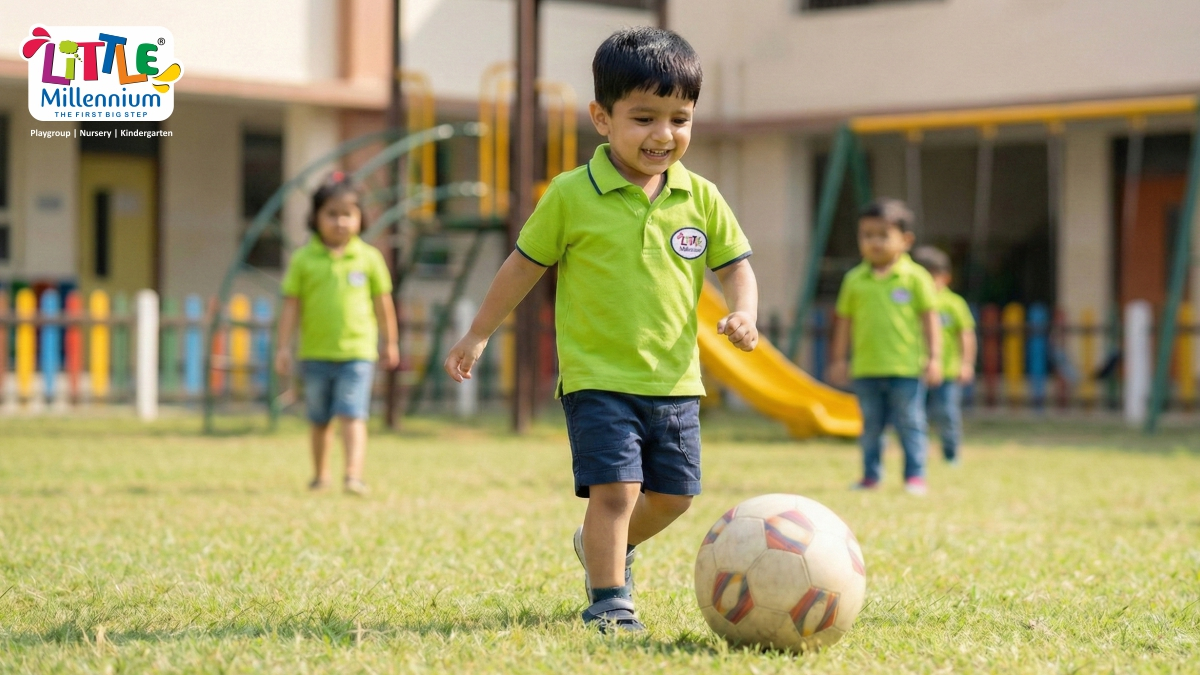
Outdoor play helps children build strength, balance, and coordination through activities like running, climbing, and free movement. These experiences support gross motor skill development, an important focus area within Little Millennium’s Seven Petal Preschool Curriculum, which emphasizes physical and motor development alongside academics.

Sensory & Cognitive Growth

Nature offers rich sensory experiences—textures, sounds, movement, and space—that stimulate curiosity and learning. Outdoor environments encourage exploration, problem-solving, and creativity as children interact with their surroundings in unstructured ways.

Mental & Emotional Well-being

Spending time outdoors helps children relax, release energy, and improve their overall mood. Open play spaces give preschoolers a healthy break from structured activities, supporting emotional balance and well-being.

Social Skills & Confidence

Group play outdoors naturally teaches sharing, cooperation, communication, and empathy. Children learn to take turns, follow simple rules, and build friendships—key skills for social development in the early years.

Outdoor Learning at Little Millennium

Little Millennium incorporates outdoor play through:

  • A curriculum that values physical, social, and emotional development
  • Age-appropriate outdoor activities and movement-based learning
  • Safe, child-friendly play areas designed for exploration and interaction
  • A Balanced Start to Lifelong Learning

Outdoor play is more than just recreation—it is a foundation for healthy growth. By combining structured learning with meaningful outdoor experiences, Little Millennium nurtures confident, curious, and well-rounded children.

If you are looking for a preschool that values holistic development and balanced learning, Little Millennium offers an environment where children can learn, play, and grow every day.

2

Understanding Screen Time

Screens are a part of everyday life—smartphones, tablets, televisions, and computers are all around us. While digital tools can support learning when used appropriately, excessive or unstructured screen time can affect a young child’s overall development. Finding the right balance is essential, especially during the preschool years.

At Little Millennium, technology is used thoughtfully through a balanced learning approach, ensuring that screen exposure never replaces hands-on experiences, play, or real-world interaction.

How Screen Time Affects Young Children


Physical Well-being

Long periods of screen use can reduce active playtime, which is important for developing strength, coordination, and healthy movement habits. Limited physical activity may also affect posture, eyesight, and overall energy levels.


Attention & Learning

Passive screen consumption can shorten attention spans and reduce focus. Young children learn best through interaction—touching, moving, exploring, and asking questions. Screens are most effective when used briefly and purposefully, alongside physical learning activities.

Social & Emotional Development

Face-to-face interactions help children understand emotions, communication, and social cues. Too much screen time may limit these opportunities, making it harder for children to build empathy, confidence, and emotional regulation skills.


Sleep Patterns

Screen use close to bedtime can interfere with sleep routines. Reduced sleep quality can affect a child’s mood, memory, and ability to engage positively during the day.


Encouraging Healthy Screen Habits

Parents can support balanced screen use by:

  • Setting clear daily screen-time limits
  • Avoiding screens during meals and before bedtime
  • Choosing age-appropriate, supervised content
  • Encouraging outdoor play, reading, and creative activities

Little Millennium’s Balanced Approach

Little Millennium follows a learning model where:

  • Digital tools support, not replace, experiential learning
  • Physical, sensory, and social development remain core priorities
  • Teachers and parents work together to guide healthy habits

A Thoughtful Balance for Growing Minds


Screens aren’t the problem—unbalanced use is. With mindful limits and the right guidance, technology can be a helpful tool rather than a distraction.

If you’re looking for a preschool that understands the importance of balanced development, Little Millennium offers an environment where children learn, play, and grow—both on and off the screen.

3

Settler’s Program: A Gentle Start

Starting preschool is a big milestone for every child, and parents naturally want this transition to feel safe, calm, and emotionally secure. At Little Millennium, we believe that a child’s earliest school experience shapes their confidence and love for learning. That’s why our 3-Month Settler’s Program is designed as a gentle, mindful introduction to preschool life.

A Mindful Start Designed for Young Learners

The move from home to school should never feel rushed. Our Settler’s Program allows toddlers to adjust gradually over three months, with shorter hours, personal attention, and nurturing support. This slow-paced approach helps children feel settled, emotionally comfortable, and ready for structured routines.

Settler’s Program
Age Group:
1.5 to 2.5 years
This phase focuses on building trust, familiarity with teachers, and early social connections in a stress-free environment.

Why Parents Choose Little Millennium

Parents trust our Settler’s Program because it is built around a child’s emotional and developmental needs:

  • Future-ready, foundational learning
  • Holistic and adaptive teaching methods
  • NEP-aligned, experiential curriculum
  • High hygiene and safety standards with CCTV surveillance
  • Well-trained, empathetic educators
  • Low teacher–child ratio for individual attention
  • Strong parent–school communication

Powered by BLOOM Curriculum

The program is supported by BLOOM, Little Millennium’s research-driven, play-based curriculum rooted in global early childhood best practices. It focuses on developing essential life skills while nurturing emotional, social, and cognitive growth.

How the Settler’s Program Helps Children Thrive

Over the settling period, parents often notice:

  • Increased confidence and emotional security
  • Reduced separation anxiety
  • Improved social interaction
  • Better routine adaptation
  • Stronger curiosity and learning readiness

Conclusion

For families, Little Millennium’s 3-Month Settler’s Program offers a well-planned, gentle start to preschool. It ensures children step into school life with comfort, confidence, and a positive learning mindset setting the foundation for a joyful preschool journey.

Why Early Social Skills Matter Most

Why Early Social Skills Matter Most

In early childhood education, parents often focus on academic readiness—letters, numbers, and basic cognitive skills. But what truly shapes a child’s future success goes beyond academics: social skills. Developing strong social abilities early on helps children become compassionate, confident, and well-rounded individuals.

Why Social Skills Matter

From ages three to four, children begin interacting more with peers beyond the family. Early social experiences help them:

  • Build relationships: Learn caring, consideration, and respect for others.
  • Manage emotions: Develop patience, cope with frustration, and celebrate others’ successes.
  • Collaborate effectively: Listen, follow instructions, and work in groups.
  • Resolve conflicts and empathize: Negotiate, see others’ perspectives, and find solutions.

Key Social Skills in Early Childhood Education
 Children develop essential life skills through daily interactions and structured activities:

  • Sharing & Taking Turns: Understanding fairness and patience.
  • Empathy: Recognizing and responding to others’ feelings.
  • Listening: Paying attention, following instructions, and responding thoughtfully.
  • Cooperation: Working in teams and adapting to group tasks.
  • Self-Expression: Communicating thoughts and emotions through words, play, or art.

How Little Millennium Nurtures Social Skills
 At Little Millennium, social-emotional development is a core part of the Seven Petal Curriculum. Our approach ensures children gain confidence in social settings through:

  • Role-play and group activities: Encourage teamwork, empathy, and communication.
  • Collaborative tasks: Share responsibilities and practice cooperation.
  • Age-appropriate milestones: Activities build confidence gradually.
  • Supportive environment: Experienced teachers guide interactions, help resolve conflicts, and model positive social behavior.

Final Thoughts: Raising Confident, Empathetic Children
 Early childhood education is about more than academics—it’s where children learn the social skills that help them thrive in life. Sharing, cooperating, expressing themselves, and understanding others lays the foundation for confidence, kindness, and happiness.

At Little Millennium, we create a warm, caring environment where your child can grow, explore, and enjoy learning every day. Visit us to see how our curriculum and supportive teachers help children develop the skills they need to flourish.

Encouraging Independent Learning in Children

Encouraging Independent Learning in Children

Every parent dreams of raising a confident, curious, and self-driven child — one who loves to learn and explore. If you’re a parent, understanding how to nurture independent learning can make a lasting difference in your child’s growth and development.

While young children naturally rely on guidance, it’s essential to help them think independently, make choices, and take responsibility for their learning. Independent learning fosters resilience, curiosity, and confidence — traits that benefit children in school and life.

At Little Millennium, every child has the potential to be an independent learner. Through hands-on exploration, age-appropriate activities, and our Seven Petal Curriculum, we create an environment where curiosity thrives and learning feels joyful.

Fostering Independent Learning: 8 Ways to Help Your Child Thrive

  1. Nurture a Growth Mindset
     Encourage children to see abilities grow with effort. Celebrate progress and treat mistakes as opportunities to learn, building confidence and a desire to improve.
  2. Create a Learning-Friendly Environment
     Engage children with books, puzzles, and learning tools at home and in classrooms. Promote curiosity and self-directed exploration so learning feels natural and enjoyable.
  3. Set Small Goals
     Introduce simple challenges like finishing a drawing or puzzle. Celebrate small achievements to build ownership, pride, and motivation.
  4. Encourage Problem-Solving
     Guide children to think through problems with open-ended questions. Experiential learning fosters critical thinking and independence.
  5. Encourage Reflection and Discussion
     Invite children to share what they learned. Reflection teaches self-expression, awareness, and helps them evaluate progress confidently.
  6. Model Independent Learning
     Demonstrate curiosity, creativity, and perseverance. Children imitate positive behaviours, learning that learning is lifelong and fun.
  7. Give Them Choices
     Allow children to make decisions on activities or books. This teaches responsibility, guided freedom, and lets them explore interests at their own pace.
  8. Support, Don’t Hover
     Provide guidance while allowing small mistakes. Balance freedom and support to build self-confidence and independence.

Why Parents Trust Little Millennium
 At Little Millennium, independent learning is part of everyday life. Our Seven Petal Curriculum focuses on language, cognitive, social, emotional, and physical development. Through play-based, experiential learning, children become curious, confident learners. Our classrooms provide safe, engaging spaces that build self-expression, problem-solving, and teamwork — foundations for lifelong learning.

Final Thought
Encouraging independent learning isn’t about doing everything for your child — it’s about guiding them to think, explore, and learn with confidence. Parents and teachers working together help children develop self-belief and curiosity for a lifetime of success.

Give your child the gift of confidence, curiosity, and a love for learning. Visit Little Millennium in your city today and see how our Seven Petal Curriculum and play-based, nurturing environment empower children to think, explore, and grow independently. Book a visit or consultation now and watch your child thrive!

How Preschool Shapes Life Quality

How Preschool Shapes Life Quality

As a parent, you want nothing but the best for your child — and it all starts with the right foundation. If you’re exploring preschool options, it’s worth understanding how a thoughtfully designed curriculum, guided by caring teachers, can nurture your child’s growth — setting them up for success, happiness, and lifelong learning.

Why the Right Curriculum Matters for Your Child

Preschool is much more than just playtime or learning the ABCs. A thoughtfully designed curriculum gives your little one the perfect blend of structured learning and fun exploration.
It helps children pick up basic literacy and numeracy while also teaching them how to make friends, express themselves, and develop self-confidence. Choosing a preschool with a strong, child-friendly curriculum sets your child on the right path from the very beginning.

Curriculum 2.0: Helping Your Child Bloom With Confidence

At our preschool, we believe every child deserves a joyful start and a strong foundation. That’s why we’ve designed Curriculum 2.0 — a skill-focused, play-based program that helps children grow in confidence, curiosity, and happiness.
Built on our award-winning 7-Petal Approach, this curriculum nurtures all-round development — academically, emotionally, socially, and physically — through fun, hands-on learning and personal attention.

Our approach focuses on 7 key areas of early development:
Socio-emotional Development – Building emotional intelligence, empathy, and healthy relationships.
Language Development – Enhancing communication, vocabulary, and comprehension skills.
Fine Motor Development – Strengthening hand-eye coordination and precision in tasks.
Cognitive Development – Fostering problem-solving, reasoning, and creativity.
Personal Awareness – Encouraging self-awareness, independence, and confidence.
Gross Motor Development – Improving balance, strength, and large muscle movements.
Nurturing Individual Potential – Celebrating each child’s unique strengths and abilities.

We make learning meaningful and enjoyable through proven global methods like Montessori, Multiple Intelligences, Theme-based learning, and Play Way — blending the best of all worlds to suit each child.

With Curriculum 2.0, your child also benefits from advanced programs designed for today’s world:
SDG Superstar — learning care for the planet and others
Phonics Reading Program — strong literacy, step by step
Finchamp — playful lessons in early financial habits
S.T.E.A.M. — exploring science, tech, arts, and more through projects

Recognised as one of India’s most trusted preschool chains, we’re committed to making childhood joyful, meaningful, and enriching — so your child grows with confidence, skills, and a love of learning.

Benefits of a Strong Preschool Curriculum Every Parent Should Know

Here’s what your child stands to gain:
Gets Ready for School — and Life
From letters and numbers to curiosity about the world, your child learns all the basics in a playful, stress-free way — making them more confident when they move to big school.
Builds Social Skills and Emotional Strength
Your child learns to share, take turns, solve little problems, and even handle emotions — skills they’ll use every single day.
Adapts to Routines Easily
Preschool routines like circle time, snack time, and group activities help children adjust to a school-like environment, so they’re ready to shine when formal schooling begins.
Long-Term Life Benefits
Studies show that children who attend high-quality preschools do better academically, earn more as adults, and even make healthier life choices.
Sparks a Love for Learning
When learning feels fun and exciting, your child develops a natural curiosity that stays with them throughout their life.

Our Unique Approach to Preschool Learning

At Little Millennium, we follow an eclectic approach to early childhood education — meaning we thoughtfully integrate the best practices from globally recognized learning philosophies rather than relying on just one. Our award-winning Seven Petal Curriculum combines proven methods from Montessori, Multiple Intelligences, Theme-based learning, and Play Way to create a balanced, joyful, and developmentally appropriate learning experience for every child.

This approach ensures that your child learns through hands-on exploration, imaginative play, social interaction, and guided discovery — fostering cognitive, emotional, social, and physical growth in a fun and engaging way.

How It Helps Your Child in School and Beyond

A good curriculum helps your child develop in every way:
Academically — through early reading, counting, problem-solving, and reasoning skills.
Socially — by learning to work with others, follow instructions, and handle emotions.
Emotionally — by gaining confidence, empathy, and independence.
In short, your child doesn’t just learn — they thrive.

Why Parents Trust Little Millennium

At Little Millennium, we know that every child is wonderfully unique — and that’s why our award-winning preschool curriculum is thoughtfully designed to help each one shine in their own way.
We go beyond just academics to focus on all-round development: building fine motor skills, encouraging communication, fostering critical thinking, and nurturing social and emotional growth. Every activity, every lesson is aimed at creating confident, happy learners ready to take on the world.

Final Thought: Give Your Child the Brightest Start

The preschool years are a magical time — full of curiosity, growth, and potential. Choosing the right preschool isn’t just about today — it’s about setting the tone for your child’s confidence, friendships, love for learning, and future success.
At Little Millennium, we’re here to help your child blossom into their best self. Visit your nearest centre today and see how we can make their early years truly unforgettable — because every child deserves a bright beginning.