
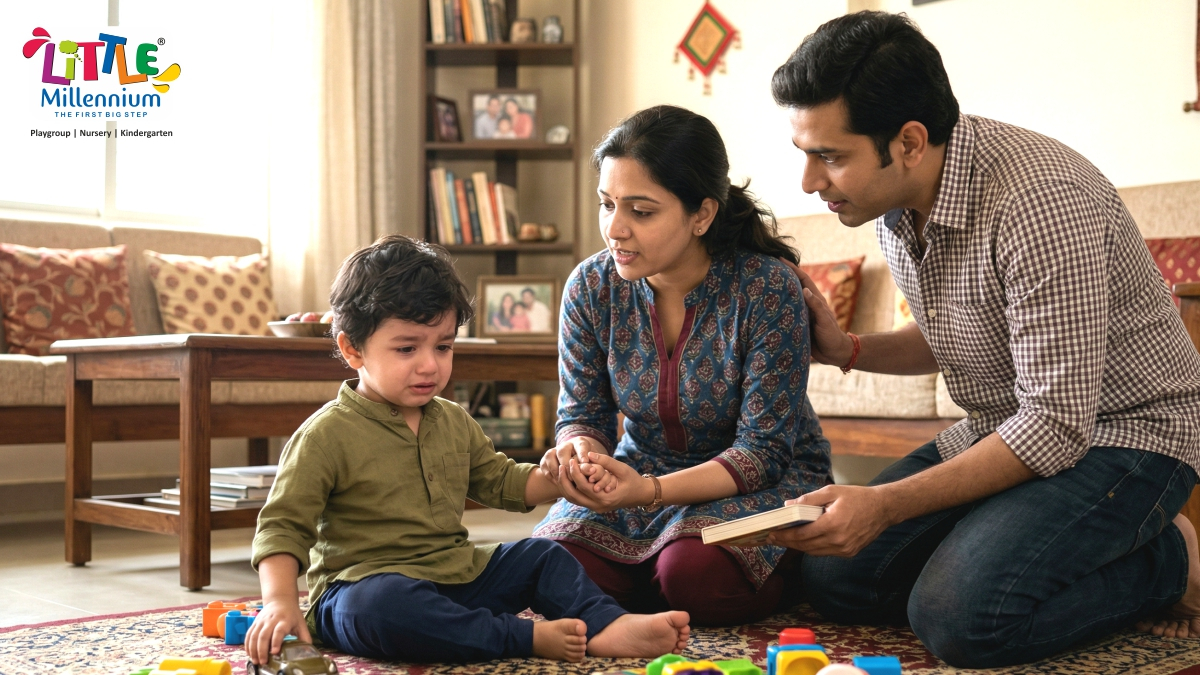
Temper tantrums are a normal and natural part of early childhood. During the formative years, children are still learning to identify, understand, and express complex emotions. For parents, responding calmly and constructively to these moments can play a pivotal role in nurturing emotional resilience, confidence, and social skills.
High-quality early childhood education programs, such as those offered at Little Millennium, emphasize emotional development alongside academic growth. Through structured guidance and carefully designed learning experiences, children learn to regulate feelings in age-appropriate ways while building the foundations for empathy, patience, and cooperation.
Understanding Why Tantrums Occur
Tantrums typically arise when children feel overwhelmed, tired, hungry, or overstimulated. Limited communication skills, frustration at not getting what they want, or difficulty managing new experiences can also trigger emotional outbursts. At this stage, children are still developing the vocabulary and strategies to express their feelings, so crying, yelling, or refusal are common responses.
The key for parents is not to suppress the tantrum instantly but to guide the child patiently, helping them navigate their emotions safely and constructively.
Supporting Your Child at Home
Parents can play an active role in helping children manage their emotions. Ensuring basic needs are met such as adequate sleep, nutrition, and comfort often reduces emotional intensity. Maintaining a calm and composed presence during a tantrum is equally critical, as children tend to mirror adult reactions. Speaking gently, kneeling to their eye level, and offering reassurance can help a child feel safe and understood.
Once the child has calmed down, parents can reinforce positive behaviour, gently explain expectations, and help children label their emotions. Using phrases like “You seem frustrated because your toy broke” or “I see that you are upset” can gradually build a child’s emotional vocabulary and self-awareness. Simple coping strategies, such as deep breathing, short quiet breaks, or guided mindfulness exercises, further support self-regulation skills.
The Role of Preschool in Emotional Growth
A nurturing preschool environment amplifies these lessons. At Little Millennium, the BLOOM Curriculum integrates social-emotional learning into daily routines, helping children develop patience, empathy, self-control, and conflict resolution skills. Through structured play, group activities, and positive reinforcement, children learn to navigate interpersonal challenges and express themselves confidently.
Programs designed for early childhood at Little Millennium encourage collaborative learning, imaginative play, and hands-on experiences, fostering both emotional intelligence and cognitive development. Preschools that follow this play-based and holistic approach offer children the opportunity to grow academically, socially, and emotionally in a safe and supportive environment.
Supporting Lifelong Emotional Well-Being
Consistent guidance, a calm and structured environment, and engagement with trained educators equip children to manage emotions effectively. Parents and preschools working together create a foundation for lifelong emotional well-being, resilience, and interpersonal skills.
Families seeking best preschools with activity-based learning and holistic development can find reassurance knowing that children in these environments not only develop academically but also build strong social, emotional, and cognitive foundations.
Conclusion
Handling tantrums is a natural part of early childhood, and the right support can make these experiences growth opportunities rather than challenges. With guidance at home and a nurturing, research-driven preschool environment, children learn to express themselves confidently, develop empathy, and acquire essential life skills. Choosing a preschool with a structured play-based curriculum and trained educators ensures that emotional growth goes hand-in-hand with early learning, setting the stage for confident, curious, and socially aware individuals.
At Little Millennium, we make the early years count through a scientifically designed, developmentally appropriate, play-based curriculum that nurtures each child’s uniqueness and builds a strong foundation, academically, socially, and emotionally preparing them for future learning and success.