
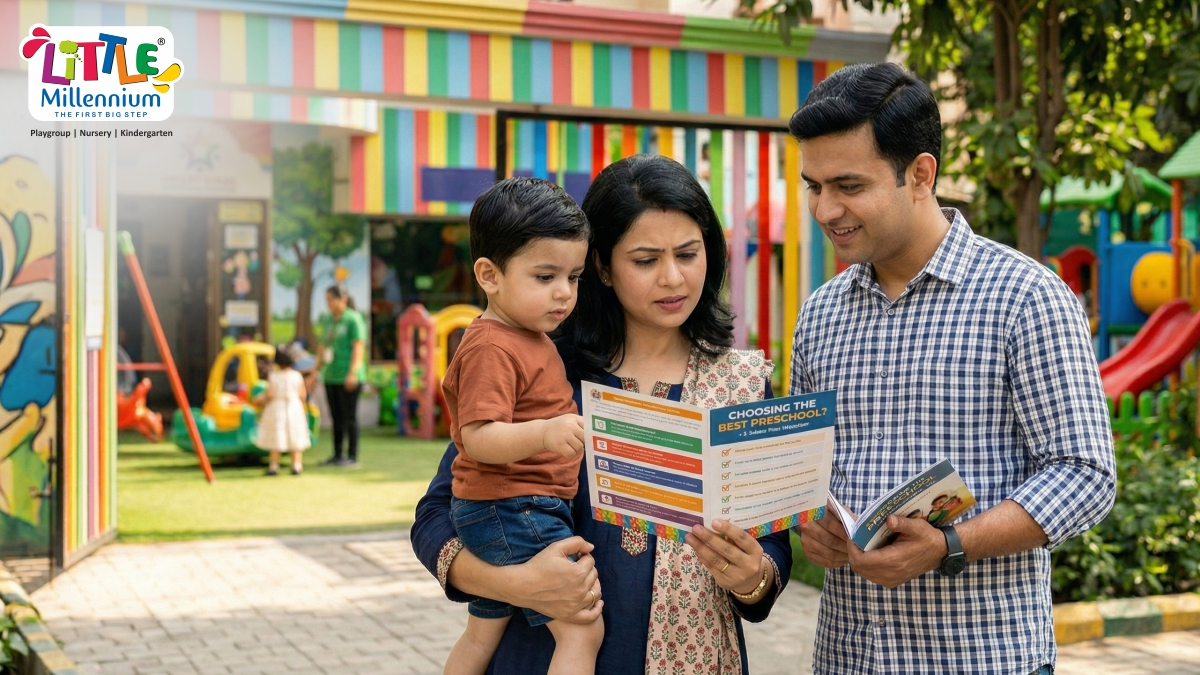
Choosing the right preschool is one of the earliest and most important decisions parents make for their child’s learning journey. For families searching for the best preschool, the choice goes beyond simply finding a nearby school. A preschool becomes a child’s first structured learning environment where they begin developing confidence, social skills, curiosity, and a love for discovery.
Since early childhood is a period of rapid development, selecting a preschool that encourages exploration, creativity, and emotional growth can have a lasting impact on a child’s future learning experience. Understanding what to look for can help parents make a confident and informed decision.
Look for a Preschool that Prioritises Holistic Early Childhood Development
One of the most important aspects of a good preschool is its focus on holistic development rather than only early academics. During the early years, children learn best through play, interaction, and hands-on experiences that stimulate their imagination and curiosity.
Many parents today prefer preschools with play-based learning and activity-based teaching methods, where children develop language skills, motor coordination, and emotional awareness naturally. Environments that encourage creativity, storytelling, music, and collaborative activities often help children become more confident and socially comfortable.
Preschools that focus on nurturing curiosity and independence during these early years are often considered among the best preschools for cognitive development and early learning.
Choose a Preschool with a Research-Driven Curriculum
A well-structured curriculum plays a crucial role in shaping early childhood education. India’s National Education Policy (NEP 2020) highlights the importance of experiential, play-based, and child-centred learning during the foundational years.
For instance, Little Millennium follows the BLOOM Curriculum, a research-driven framework designed to support the holistic development of young learners. This curriculum encourages learning through exploration, storytelling, creative expression, and hands-on experiences.
The approach focuses on multiple areas of development, including literacy and numeracy readiness, physical growth, creative thinking, and personal and social development. By combining structured activities with joyful learning experiences, children gradually develop both academic readiness and essential life skills.
Preschools that follow such structured yet flexible frameworks often provide some of the best early childhood programs for young learners.
Evaluate the Teaching Philosophy and Learning Approach
Another important factor while choosing a preschool is the teaching approach followed in the classroom. Effective early learning environments typically combine global best practices with child-friendly teaching methods.
A balanced approach may include storytelling, role-play activities, music and movement sessions, and hands-on exploration. These experiences help children develop communication skills, creativity, and confidence while keeping learning engaging and enjoyable.
Influences from respected educators such as Rabindranath Tagore and Howard Gardner have shaped many modern early childhood education philosophies, encouraging creativity, multiple intelligences, and experiential learning. At the same time, the role of teachers remains central. Qualified educators who demonstrate patience, empathy, and enthusiasm create a nurturing environment where children feel comfortable expressing themselves.
Visit the Preschool Environment and Facilities
A personal visit to the preschool can provide valuable insights that brochures or websites may not fully convey. Observing the learning environment helps parents understand how the school functions on a daily basis.
During a visit, it is helpful to look at aspects such as classroom safety, hygiene standards, ventilation, and the availability of age-appropriate learning materials. Interactive learning spaces, colourful classrooms, and designated play areas often reflect a preschool’s commitment to creating a stimulating environment for children.
Safety measures are equally important. Many parents today prefer early learning centres with CCTV monitoring, trained staff, and secure child pick-up systems, as these provide reassurance about their child’s well-being during school hours.
Understand the Long-Term Benefits of Quality Preschool Education
A well-chosen preschool does much more than introduce children to letters and numbers. It plays a vital role in shaping important life skills that support future academic and personal growth.
Children who attend structured early childhood education programs often develop stronger communication skills, better emotional regulation, and greater independence. They also learn to interact with peers, solve simple problems, and adapt to group learning environments.
These early experiences help build confidence and school readiness, making the transition to kindergarten and formal schooling smoother and more enjoyable.
Final Thoughts
Selecting the right preschool requires careful consideration of the curriculum, teaching approach, safety standards, and overall learning environment. For families exploring the best preschool, choosing a nurturing and research-driven early learning centre can make a meaningful difference in a child’s development.
A preschool that encourages curiosity, creativity, and social interaction helps children build the confidence and skills they need for lifelong learning. With the right environment and guidance, children begin their educational journey with enthusiasm, independence, and a strong foundation for the years ahead.
At Little Millennium, we make the early years count through a scientifically designed, developmentally appropriate, play-based curriculum that nurtures each child’s uniqueness and builds a strong foundation, academically, socially, and emotionally preparing them for future learning and success.